2026 Status
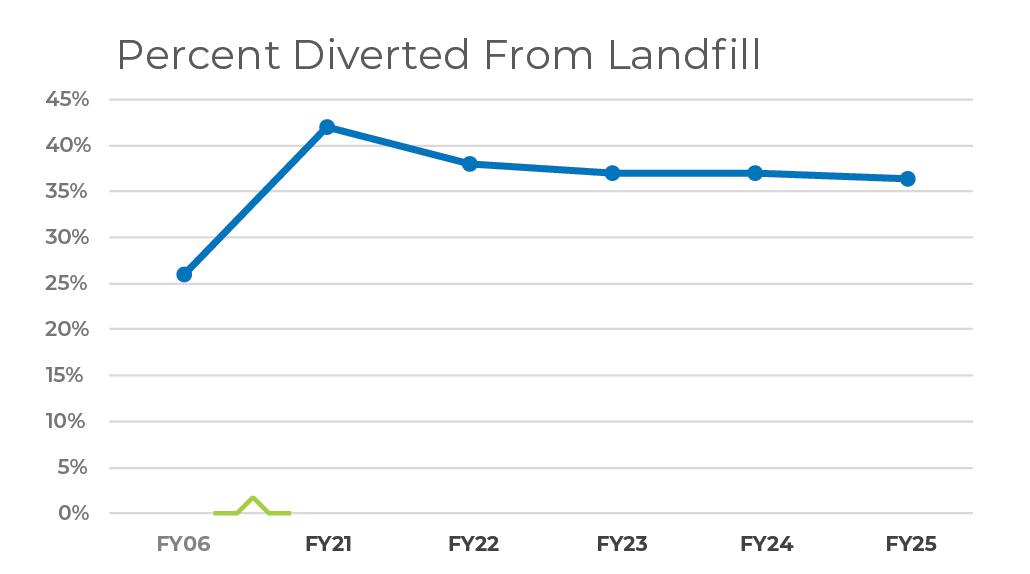
The University of Michigan (Ann Arbor) achieved a 33.66% diversion rate in FY26. Learn more about our progress and activities in the FY26 U-M Waste Reduction Report.
Refreshed Waste Reduction Goal
The refreshed waste reduction goals expand upon U-M’s original waste goal adopted in 2011, reflecting updated data, evolving campus systems, and lessons learned over more than a decade of implementation.
Together, these targets more accurately reflect the university’s current waste reduction strategy — one that emphasizes waste prevention, reuse, and diversion in support of a more circular campus.
The refreshed goals were informed by a campus waste audit, community input gathered throughout 2024, and collaboration with a cross-campus stakeholder workstream. They also consider the broader environmental, equity, and carbon impacts associated with materials management.
Primary targets
Achieve a 50% waste diversion rate by 2030, with a continued 2% annual increase thereafter.
Decrease total waste generated.
Key indicators for tracking progress
To better understand and improve waste systems over time, U-M will track the following indicators:
Diversion and capture
- Single-stream recycling capture rate ↑
- Compost capture rate ↑
- Construction and demolition waste diversion ↑
- Michigan Medicine-Ann Arbor diversion rate ↑
Waste reduction
- Waste per person ↓
- Waste per square foot of building area ↓
- Regulated waste ↓
- Student move-out waste per resident ↓
Culture and engagement
- Improvement in Sustainability Cultural Indicators Project (SCIP) waste indicators ↑
Reuse
- Establish a campus-wide material reuse goal by 2030
Questions? Email [email protected].
Supporting Efforts
Take Action
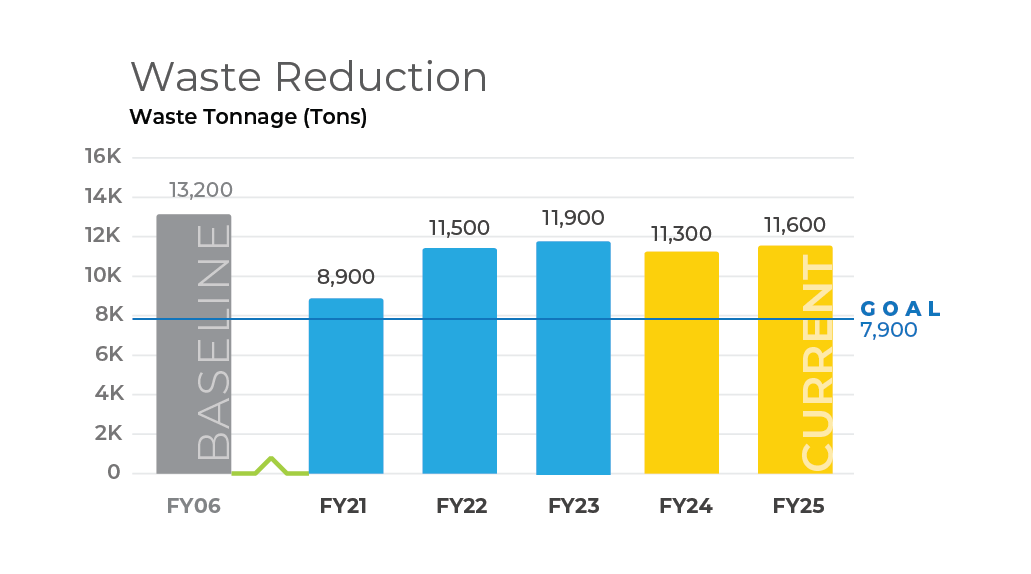
2025 Goal Background
The 2025 waste reduction goal for the Ann Arbor campus, established in 2011, is to reduce waste sent to landfills by 40% by 2025. Here’s some historical information about this goal.