Recent Wins – 2025 Highlights
Expanded waste-reduction pilots with campus partners, including public compost bins in U-M Libraries, Zero Waste Game Day composting at the Campus Farm, and targeted recycling collections for glass and plastic wrap.
Launched the Lab Swap Shop with LSA and expanded the Lab Reuse Program, increasing reuse of carbon-intensive laboratory equipment and materials through swap events and ongoing redistribution.
Advanced bin streamlining efforts, transitioning to larger centralized bins, reducing deskside bins, and tracking diversion and contamination improvements.
Improved composting in residential settings, engaging Northwood Community Apartments residents to reduce contamination, increase participation, and expand access to compost collection.
Engaged more than 150 community members in developing refreshed university-wide waste-reduction goals that better reflect reuse, composting, and diversion efforts across campus.
Recognized nationally for student-led waste-reduction innovation, including an award for a returnable can shelf initiative.
Refreshed Waste Reduction Goal
The refreshed waste reduction goals expand upon U-M’s original waste goal adopted in 2011, reflecting updated data, evolving campus systems, and lessons learned over more than a decade of implementation.
Together, these targets more accurately reflect the university’s current waste reduction strategy — one that emphasizes waste prevention, reuse, and diversion in support of a more circular campus.
The refreshed goals were informed by a campus waste audit, community input gathered throughout 2024, and collaboration with a cross-campus stakeholder workstream. They also consider the broader environmental, equity, and carbon impacts associated with materials management.
Primary targets
Achieve a 50% waste diversion rate by 2030, with a continued 2% annual increase thereafter.
Decrease total waste generated.
Key indicators for tracking progress
To better understand and improve waste systems over time, U-M will track the following indicators:
Diversion and capture
- Single-stream recycling capture rate ↑
- Compost capture rate ↑
- Construction and demolition waste diversion ↑
- Michigan Medicine-Ann Arbor diversion rate ↑
Waste reduction
- Waste per person ↓
- Waste per square foot of building area ↓
- Regulated waste ↓
- Student move-out waste per resident ↓
Culture and engagement
- Improvement in Sustainability Cultural Indicators Project (SCIP) waste indicators ↑
Reuse
- Establish a campus-wide material reuse goal by 2030
Questions? Email [email protected].
Supporting Efforts
Take Action
2025 Goal Background
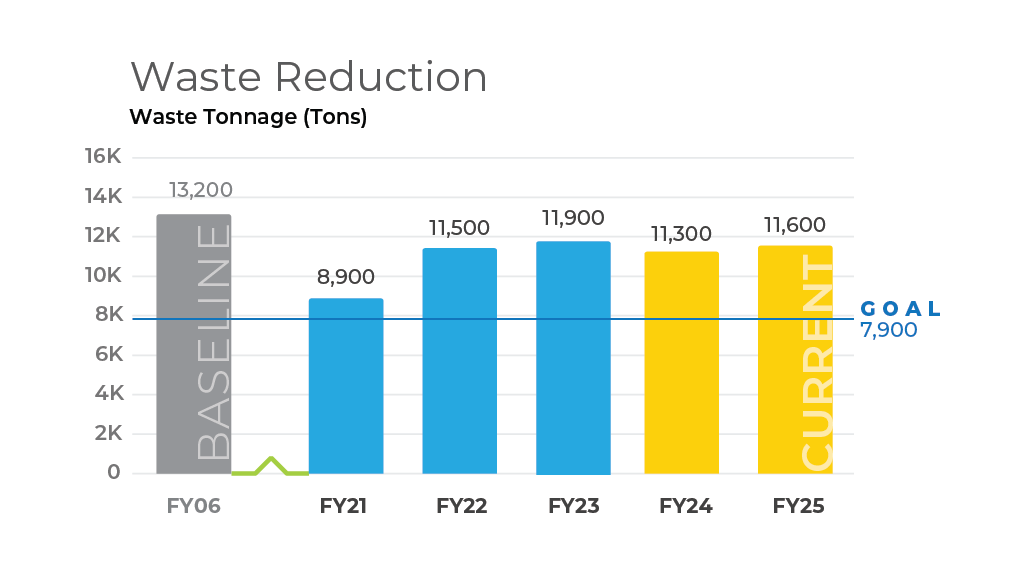
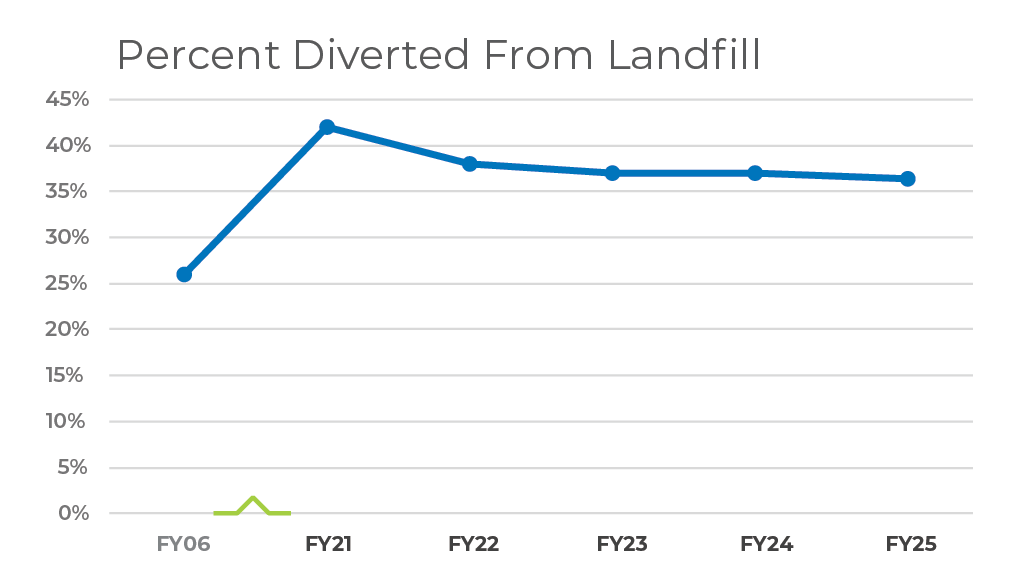
The 2025 waste reduction goal for the Ann Arbor campus, established in 2011, is to reduce waste sent to landfills by 40% by 2025. Here’s some historical information about this goal.