
Approximately 45% of emissions occur upstream in supply chains from extraction of materials and manufacturing. These emissions fall into the category of Scope 3 emissions. Sustainable purchasing is a great way for individuals to make a tangible impact. Here are some tools to help.
- Sustainable purchasing guides
U-M’s sustainable purchasing guide will familiarize you with the basics of green purchasing.
You can also access the Sustainable Purchasing Leadership Council’s lab procurement guide. U-M is an institutional member of this organization. Use your U-M email to sign up for free access.
- Reusables over disposables
Prioritize reusable supplies over disposables. The impact of reusables is significantly lower, especially when they are sterilized in fully loaded autoclaves or dishwashers. Check out the Ditch the Disposables Guide: Lab Edition to learn some simple switches!”
- Up-to-date inventory and strategic ordering
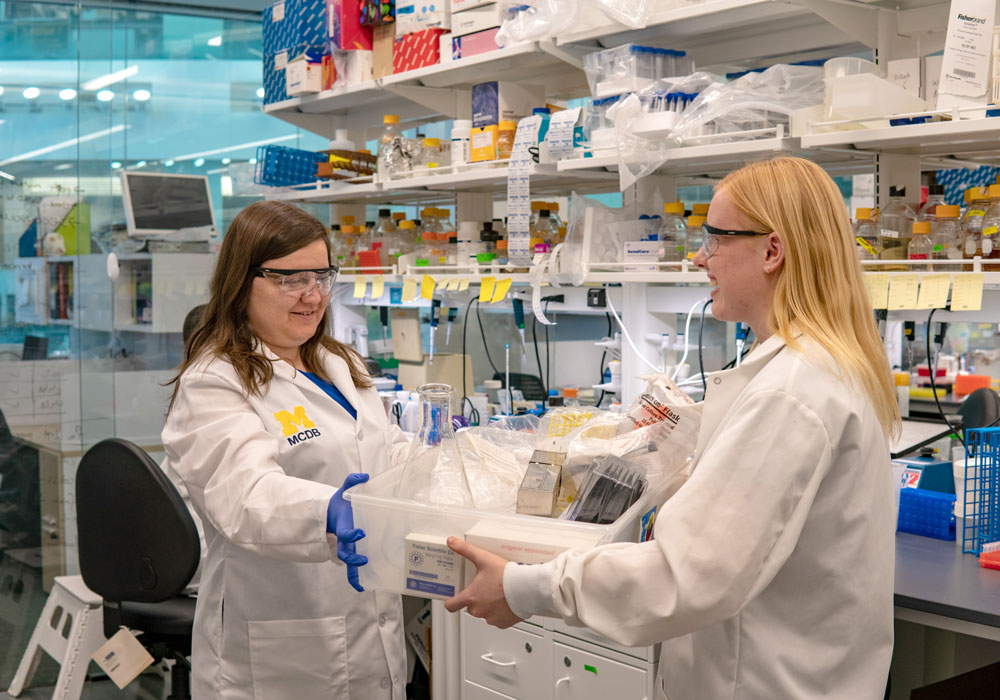
Only ordering what you need is a self-evident sustainability practice that also saves money. But people sometimes over-order because they don’t know what they already have. So, keep your inventory of supplies and chemicals up to date with cleanouts every 6 months. You can donate excess supplies to the Lab Reuse program. When ordering, use the Guide to Stocking a Sustainable Laboratory to understand questions you can ask to better understand your lab needs and product impacts.

- Visit Property Disposition and the Lab Reuse inventory before purchasing new items
- ACT label
- Energy Star
- Recycled lab supplies
Polycarbin has pipette tips, conical tubes, and more that are made from recycled lab plastics. Check out these products on M-Marketsite to support a closed-loop system!
- Look for “greener choice” products on M-Marketsite

- Core stores and facilities
Core stores often order commonly used items in bulk, reducing the need for individual labs to ship items directly to yourself. You can also use equipment at a core facility instead of buying your own, especially if the equipment will be rarely used!
- Prioritize Sharing
Before buying consumables and chemicals that you may not need all of, ask neighboring labs if you can share resources or consolidate orders. When considering equipment purchases, investigate where opportunities to share may exist. The Do’s and Don’ts of Equipment Sharing guide should be consulted before buying equipment.