Recent Wins – 2025 Highlights
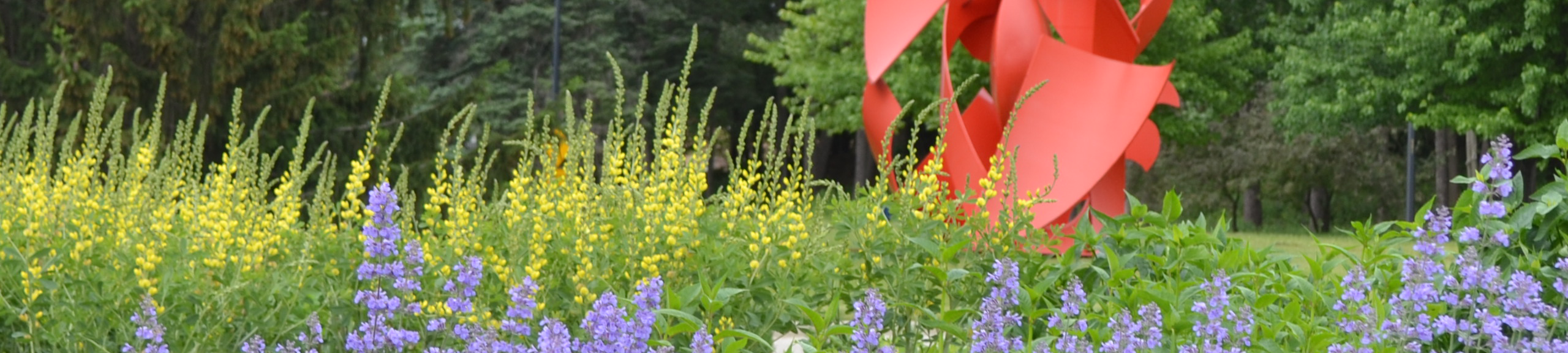
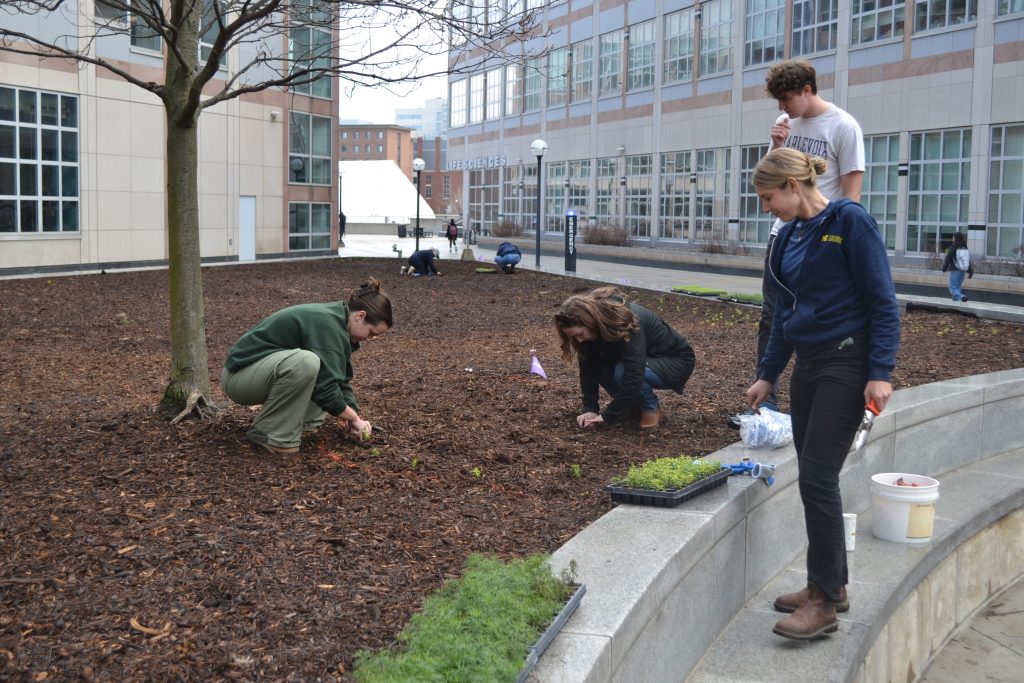
F&O Grounds Services partnered with LSA to convert 15,000 sq ft of turf to a high-visibility pollinator garden outside the LSI building.
Refreshed Goals!
The refreshed Resilient Grounds goals expand upon U-M’s original landscape and chemical reduction goals adopted in 2011, reflecting updated data, evolving campus conditions, and lessons learned over more than a decade of implementation.
Together, these goals emphasize reducing synthetic chemical use, improving biodiversity and ecosystem health, expanding naturalized landscapes, and exploring more site-specific approaches to stormwater and land management across the Ann Arbor campus.
Refreshed Resilient Grounds Goals and Targets
Landscape chemical reduction
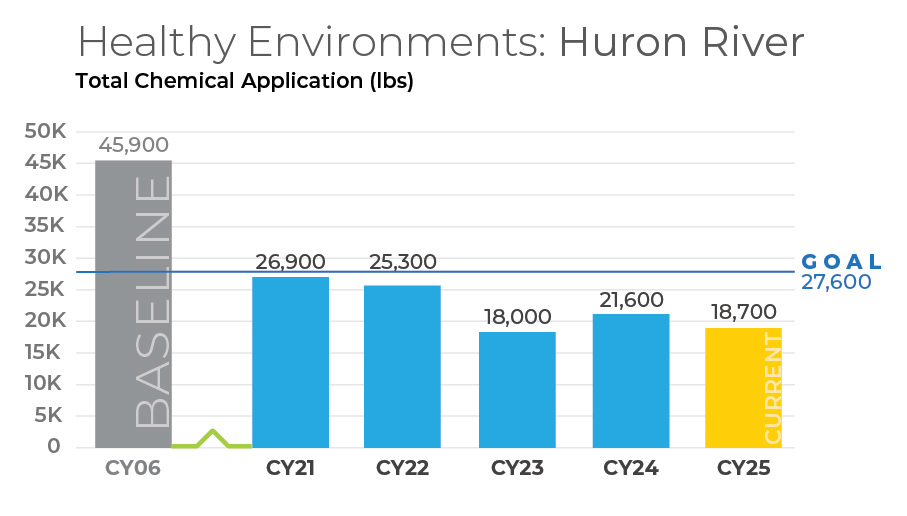
- Reduce active ingredients of synthetic chemicals by 70% from the 2006 baseline by 2030.
- Eliminate the use of neonicotinoids and 2-4D by 2030 with the exception of treating noxious weeds, invasive plants, and pests.
Biodiversity and ecosystem health
To strengthen ecological understanding and long-term stewardship, U-M will:
- Conduct a campus-wide inventory and gap analysis of ecosystem GIS data to reflect institutional priorities and values, aligned with an ecosystem or habitat index.
- Complete a comprehensive ecosystem assessment, including:
- Use assessment findings to inform conservation planning and future decision-making
- Develop S.M.A.R.T. biodiversity goal(s) by 2027
Land use and stormwater
- Maintain at least 75% of green space in the greater Ann Arbor campus area as naturalized and/or sustainable, aligned with future campus development.
- Increase the resiliency of campus greenspace and infrastructure by prioritizing compact development and preserving and/or restoring habitat and ecosystem services.
- Implement campus-as-lab projects to test stormwater management strategies and evaluate co-benefits, aligned with Campus Plan 2050 and campus sub-area plans
- Establish more nuanced, site-specific stormwater goals by 2027, reflecting local conditions and opportunities
Engagement and stewardship
- Increase visibility of sustainable grounds and stormwater projects across campus
- Expand engagement with academic and research partners to support campus-as-lab opportunities
- Increase and track institutional support for natural area stewardship, including funding, volunteer engagement, and curricular integration.
Workstream Partners
- F&O Grounds Services
- Matthaei Botanical Gardens and Nichols Arboretum
- Athletics
- U-M Golf Course and Radrick Golf Course
- Recreational Sports
- Campus planning and stormwater staff
- Faculty from the School for Environment and Sustainability, College of Engineering, and Taubman College of Architecture and Urban Planning
Efforts Supporting
Resilient Grounds
- Sustainable land management methods and guidelines
- Sustainable grounds management – Pollinator corridors, prescribed burns, goats, and more!
- Stormwater management program
- Stormwater management highlights
- North Campus Woods Conservation Program (volunteer opportunity!)
- Pilot of synthetic-chemical-free zone encompassing Central Campus Diag, relying heavily on manual weed removal and organic products
- Natural Area Specialist position in F&O Grounds Services
Recognition
Resources
2025 Goal Background