
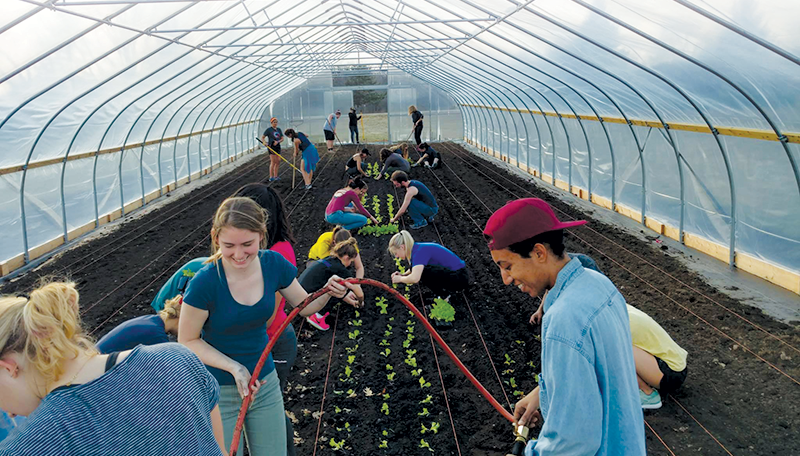
Are you a student, faculty member, or staff member interested in implementing a sustainability project on campus? You’ve come to the right place!
The University of Michigan experience is more than lectures and classrooms. U-M recognizes the importance of fostering living-learning lab opportunities on campus. These opportunities provide a chance to expand learning experiences outside of the classroom through “real-world” lessons associated with developing and managing sustainability projects.
What is a Campus-as-Lab Sustainability Project?
A Campus-as-Lab (CAL) project links students, faculty, and staff to the physical, operational, behavioral, and cultural components of the University of Michigan for research and experiential learning to advance sustainability and create scalable and replicable solutions. CAL projects range from small-scale pilot projects to larger, more complex projects. For example:
- Small-scale: coordinating the collection of special items for recycling, tweaking existing programs and measuring impact
- Large projects: adjustments to infrastructure or operations, such as installing pollinator gardens, solar picnic tables, or ongoing monitoring devices
The Office of Campus Sustainability & Innovation (OCSI) CAL team serves as the liaison for projects where sustainability in capital projects, systems planning, or operations is a primary outcome. We can help connect you to potential project partners and funding sources, and guide you through the approval process to help you be successful.
OCSI will prioritize projects that support and inform strategic planning in alignment with Campus Plan 2050 and Vision 2034 (particularly those enhancing the sustainability of the built and natural environment) or those that support campus sustainability goals.
In some cases, working directly with one of our partners is a better place to start. Check out this info for projects related to MDining and contact Keith Soster ([email protected]). For projects related to Student Life, please contact Heather King ([email protected]).
OCSI Point of Contact
If your project requires input from Facilities and Operations, please work with OCSI. As a public institution, U-M is responsible for ensuring that our campus meets or exceeds all relevant construction, environmental, and safety regulations. Often, this means unanticipated steps in your project. We can improve your success and minimize delays by advising you and connecting you with the proper Facilities and Operations staff necessary to approve operational adjustments and install infrastructure on campus. We recommend contacting [email protected] early in the development phase.
Implementation Consideration
Institutional Support
Projects are more successful when there are strong institutional partnerships. Often, support of a university department can help navigate project logistics, including financial and/or physical maintenance, coordination with capital planning and operations, and ensuring any regulatory obligations are met.
Working with the support and mentorship of U-M faculty and/or staff can also be beneficial, as these mentors may be able to communicate with building facility managers and school deans, whose support is often necessary to gain approval l for installation of projects in, on, or around a facility.
Administrative/leadership approval may be required depending on the nature of the project. OCSI will assist in determining if approval is required and recommend a path forward. Leadership may include the Provost’s Office, Business & Finance, deans, and others.
Location Approval
OCSI can help with site selection and approval.
The Campus Planning Office within Architecture, Engineering and Construction (AEC) is responsible for managing the use of university property. They may be able to assist with finding a suitable location, or if you have a preferred location in mind, they can determine whether or not that space is available and what plans may exist for the location. The Campus Planning Office has final approval over the use of exterior spaces.
Engineering Feasibility Study
If a project involves placing, modifying or building a structure on campus, a detailed feasibility study conducted via AEC may be required to determine the viability of the project. Funding for the study is the responsibility of the project sponsor.
Based on feasibility study results and project complexity, AEC may need to be involved in managing project design and construction activities.
Exterior Elements Review Committee (EERC) Approval
If your project will affect the exterior of buildings, any aspect of the university grounds, or an interior public lobby of a building, it must be approved by the EERC, which is advisory to Campus Planning.
We can help you determine whether your project requires EERC review. If so, you must submit a project proposal. Here’s more info on EERC guidelines and procedures.
If necessary, we can assist you in preparing a comprehensive project proposal for EERC.
Campus Exterior Operations Committee (CEOC)
Projects on campus grounds that might impact the operations of campus land must be reviewed and approved by the CEOC. OCSI can help determine whether this approval is necessary, and, if we are a project partner or sponsor, can also support the development of documents and presentation of your project to this body.
Projects In Buildings
If your project is proposed inside a campus building, buy-in from the relevant school or college, or unit, will be required. Having support from both administrative and facilities staff will increase chances of success. Some units have their own approval processes, which OCSI can help navigate.
Preparing your proposal for these approvals
If necessary, we can assist you in preparing a comprehensive project proposal for these reviews.
Project Funding
To obtain approval to move forward with a sustainability project, an adequate funding source must be secured. See “Funding Opportunities” in the right sidebar for a couple of possibilities.
Questions? Contact [email protected]
Community Engagement
U-M is committed to instilling a university-wide culture of sustainability. Sustainability projects provide an opportunity for our campus community to experience and learn about sustainability issues such as energy conservation, greenhouse gas reduction, and waste reduction.
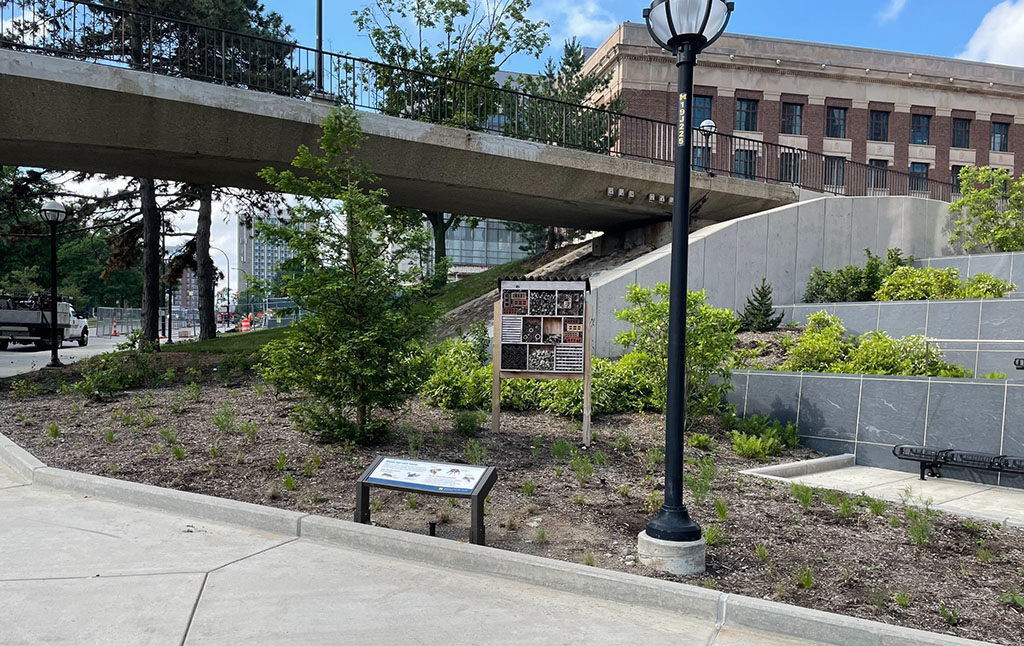
Demonstration pollinator garden installed as part of SEAS Master’s Project to earn Ann Arbor’s Campus Bee Campus Certification.
To leverage the project for community awareness, the installation process should include an educational component designed to inform the campus as to what the project is, how it works, and how they can interact with it. We can assist with information sharing by promoting the project through university news, OCSI’ website, the Planet Blue website, and social media.
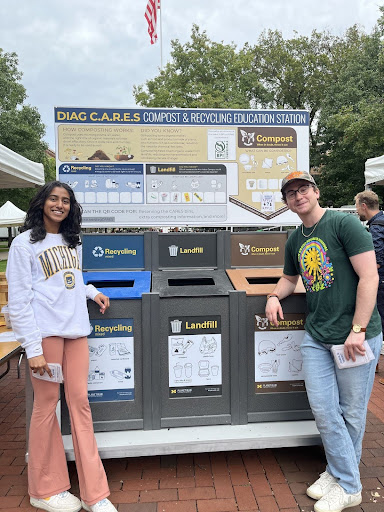
Diag C.A.R.E.S bin, a Planet Blue Student Innovation Fund project
Funding Opportunities
OCS can help identify project funding and potential partners that may be able to contribute resources to the project implementation and maintenance. Check out some of the funding opportunities.